The compound.
Our SBS-modified bitumen formulation has been refined across six decades of batch production. We don't license a recipe from a supplier. We don't subcontract compounding to a third party.
LAMA has been formulating and manufacturing waterproofing materials since 1963. Today we make roofing underlayments and membranes in Brantford, Ontario — using the same formulations, lab discipline, and quality system the company has refined for more than sixty years.
LAMA was founded in Jordan by Dr. Zafer Sawaf, a chemical engineer with a PhD from Purdue University. Before LAMA, Dr. Sawaf served in Jordan's Ministry of Industry and as Secretary-General of the Arab Standards and Metrology Organization. The asphalt formulation work he developed in the early years is the technical foundation the company still builds on.
After more than a decade producing coatings and mastics, LAMA added its first membrane production line. The formulation work from those years — refined across thousands of batches — became the basis for every product LAMA makes today.
Through the 1990s LAMA became a recognized standard among contractors in the Middle East. The reputation came from product consistency, not marketing.
The Quality Management System LAMA implemented in 1999 is the same system, refined continuously, that runs the Brantford plant today. Twenty-seven years of formal quality discipline.
Additional manufacturing facilities were built in 2002 and 2012 to meet demand across the region.
LAMA Canada was incorporated and a new manufacturing facility was established in Brantford, Ontario. Same formulations, same QMS, adapted to North American climate requirements and supply chains.
Most roofing materials manufacturers buy a turnkey production line from a vendor and run it. We did something different. From the formulation work in Dr. Sawaf's labs in 1963 to the production line running in Brantford today, every meaningful part of how we make rolls is something we built, refined, or chose to control ourselves.
Our SBS-modified bitumen formulation has been refined across six decades of batch production. We don't license a recipe from a supplier. We don't subcontract compounding to a third party.
The production line in Brantford was built, configured, and tuned in-house. The mixer, the calender, the cooling system, the winding station — each station was set up for the products we actually make, not a generic membrane spec.
Every roll is sampled and tested in our own lab using our own equipment, on our own calibration schedule. Test methods follow ASTM, CSA, and BS standards; the testing itself stays in-house.
The QMS LAMA implemented in 1999 has been continuously refined for twenty-seven years. It crossed the Atlantic with us in 2019 and runs the Brantford plant today.
In 2024 we started building Pulse — our own software platform for running the plant. Most manufacturers our size license a generic ERP or MES system. We built ours because nothing off the shelf matched how we actually work.
Pulse runs our QMS, our inventory, our lot tracing, and our time clock. Every batch, every roll, every raw material lot, every test result lives in one system we control. When a question comes up about a specific roll shipped two years ago, the answer is in Pulse.
The next step is to model the data we're collecting and build two-way communication between the physical component and its digital representative.
When something on a job site goes wrong with a roofing product, the question is always the same: what was in it, and why did it fail. Most underlayment manufacturers can't fully answer that. They subcontract the compound, license the formulation, or run a generic line with no real-time visibility. When the call comes, the trail goes cold.
We can answer it. Every roll we ship is tied to a batch number, a production run, a set of lab tests, and a date — and that record stays in Pulse for as long as we exist. If a question ever comes up, we go back to the record. Not next week. Not after we dig through files. The same day.
That's the practical version of "self-sufficiency": you call, we know.
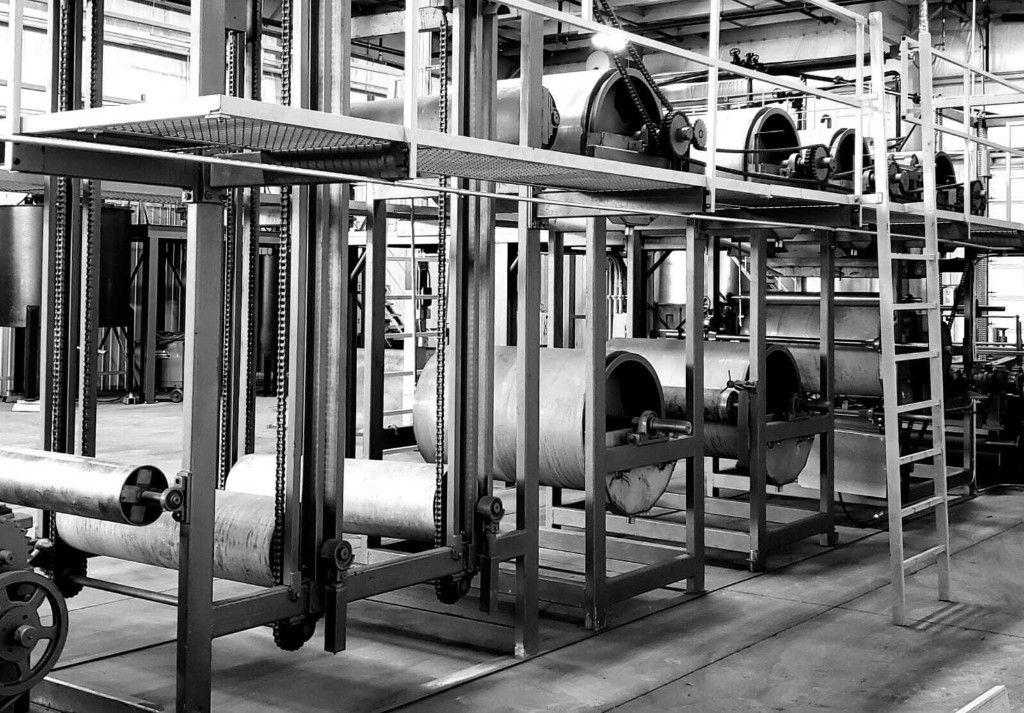
LAMA Canada operates in Brantford, Ontario. A team of 35 people. One production line. Distributors in 5 provinces and 18 states. Lead times measured in weeks, not months.
We don't sell direct to contractors. We make rolls in Brantford and ship them to the distributors who serve their markets.
If you're a distributor looking for a supplier who won't compete with you, a private-label partner looking for a controlled production platform, or a contractor checking the brand on a roll you just received — you can reach us directly.